Surgical Services for Dogs and Cats in Surrey
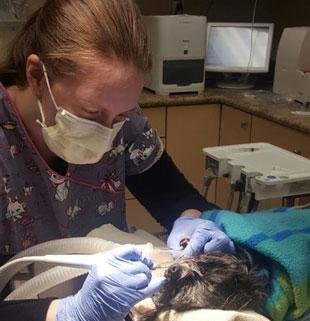
Veterinary surgical services cover procedures performed under general anaesthesia on dogs and cats. Common procedures include spay and neuter, mass and lump removal, abdominal surgery such as cystotomy or exploratory surgery, and wound repair. Patients are assessed beforehand with a physical exam and bloodwork, then monitored continuously by a trained team throughout.
Spay and Neuter Surgery in Surrey
Spaying and neutering remain the most common procedures we perform. In females, an ovariohysterectomy removes the ovaries and uterus, which also removes the risk of pyometra, a serious uterine infection seen in older unspayed dogs and cats. In males, castration is a shorter procedure with a quicker recovery.
Timing the procedure
There is no single right age. Breed, expected adult size, sex, and household circumstances all shift the ideal window, and large breed dogs in particular benefit from an individual conversation rather than a default date.
When it is less routine
Cryptorchidism, where one or both testicles have not descended, needs a different approach and usually a longer procedure. We will explain the difference before the day rather than on it.
Soft Tissue Surgical Services in Surrey
Soft tissue surgery covers everything that is not bone. That includes mass and lump removal, wound and laceration repair, cystotomy to remove bladder stones, exploratory abdominal surgery where imaging has not given a full answer, and procedures on the spleen or intestine.
Any lump we remove can be sent for laboratory analysis so you know what it was rather than guessing. We will always tell you when that is worth doing and when it is not.
Most soft tissue work here is done as a day procedure, with admission in the morning and discharge the same afternoon once your pet is fully awake and comfortable. Where a case turns out to be more involved than the imaging suggested, we stop and call you before going further.
Lumps and Masses in Surrey
Most lumps on a dog or cat turn out to be harmless. The difficulty is that benign and malignant masses can look and feel identical from the outside, and waiting to see whether one grows is the one approach that costs you something if it is the wrong guess.
A fine needle aspirate takes cells from the mass, often without sedation, and cytology tells us a great deal within the same visit. Where that is inconclusive, or where the mass is in an awkward place, removing it and sending the tissue for analysis gives a definitive answer along with a margin assessment.
Bring any new lump to us rather than monitoring it at home, and mention anything that has changed in size, firmness, or colour, or that your pet has started licking. Earlier removal is nearly always a smaller surgery than later removal.
Orthopaedic and Referral Surgery in Surrey
Some procedures are better done by a surgeon who performs them weekly. Complex orthopaedic work falls into that category, and when a case needs it we arrange referral to our specialist referral partners rather than stretching beyond what we do well here.
That is a deliberate choice, not a limitation. You get someone who performs that procedure regularly, and we stay involved for the follow-up care close to home in Surrey.
In practice that means we do the work-up here, send the imaging and history across with the referral so nothing is repeated unnecessarily, and then handle the recheck visits, suture removal, and rehabilitation locally once your pet is home. You are not left to coordinate between two clinics on your own.
Foreign Body and Obstruction Surgery in Surrey
Dogs swallow things. So do cats, usually string, tinsel, or hair ties. When an object lodges in the stomach or intestine it stops food and fluid passing, and that becomes serious quickly.
The signs are repeated vomiting, refusing food, a painful abdomen, and lethargy. Radiographs and ultrasound usually tell us whether something is stuck and roughly where, and sometimes an object in the stomach can be retrieved without opening the abdomen at all. Where it has moved further along, surgery is the answer, and the sooner it happens the better the affected section of intestine tends to be.
Linear foreign bodies, meaning string and thread, deserve a particular mention because they are deceptively dangerous. If you ever see thread at your pet’s mouth or rear, do not pull it. Call us.
Preparing for Surgery Day in Surrey
Knowing the shape of the day removes most of the worry.
The night before
We will give you fasting instructions when the surgery is booked. They vary by patient, so please follow ours rather than general advice found online. Very young animals and diabetic patients have different instructions entirely.
Drop-off
Plan for a morning admission. A team member will go through the consent paperwork, confirm the plan, take a current weight, and answer anything outstanding. This is the moment to ask, and there is no question too small. Leave a phone number you will actually answer during the day.
During and after
We will call you once your pet is awake and comfortable, and again to arrange collection. Most routine patients go home the same day. Bring a carrier for cats and small dogs, and expect your pet to be sleepy, slightly wobbly, and uninterested in dinner that evening. All of that is normal.
Estimates, Consent, and Decisions in Surrey
You will receive a written estimate before anything is booked, covering the anaesthesia, the procedure itself, pain control, and the follow-up visit. If we find something during surgery that changes the picture, we stop and call you rather than proceeding on an assumption.
Where a case has more than one reasonable path, we will set them out honestly, including the one we would choose and why. We will also tell you plainly when a procedure is not in a patient’s interest, which happens, particularly with very elderly animals where the anaesthetic risk outweighs the benefit. A recommendation you can disagree with is more useful than one framed to be unarguable.
Anaesthesia and Patient Safety in Surrey
Most anaesthetic anxiety comes from not knowing what happens, so here is the sequence. Before the day, we perform a physical exam and recommend pre-anaesthetic bloodwork, which checks organ function and flags anything that would change the plan.
On the day, each patient receives an anaesthetic protocol matched to its age, weight, and health rather than a fixed dose. A team member stays with your pet throughout, with continuous anaesthetic monitoring of heart rate, breathing, blood pressure, oxygen levels, and body temperature. Pain control starts before the first incision, not after waking, because getting ahead of discomfort works better than catching up with it.
Recovery and Aftercare in Surrey
Your pet goes home with clear written instructions covering activity restriction, incision care, and what normal recovery looks like day by day. Sutures or staples, where used, are removed at a follow-up visit, and we check the site at the same time.
Call us if the incision looks red, swollen, or open, if your pet will not settle or eat, or if anything simply feels wrong to you. Owners notice problems first, and we would far rather see a patient for nothing than hear about it a week late. Families across Surrey, including Newton, bring post-operative patients back to us for recheck rather than travelling further.
Good to know
Questions Surrey Pet Owners Ask Us
Is anaesthesia safe for my pet?
What age should my dog or cat be spayed or neutered?
Why does my pet need bloodwork before surgery?
How long is recovery after a spay or neuter?
Do you remove lumps, and will you tell me what it was?
What if my pet needs a procedure you do not perform here?