

Kitten First-Year Guide in Surrey
Congratulations on the new kitten. Cats are quieter about their needs than dogs are, which is the one thing worth knowing before everything else in this guide: a kitten rarely tells you something is wrong in a way you cannot miss. The first year is about a vaccine series finished on time, a litter box set up so it never becomes a problem, food built for an obligate carnivore, and enough early handling that the carrier and the clinic are unremarkable for the next fifteen years.
We are at 7218 King George Blvd Ste 120, Surrey, BC V3W 5A5, and we are open seven days a week. If something about your kitten changes and you are not sure whether it matters, call us on (604) 501-0077. With cats, the small changes are usually the important ones.
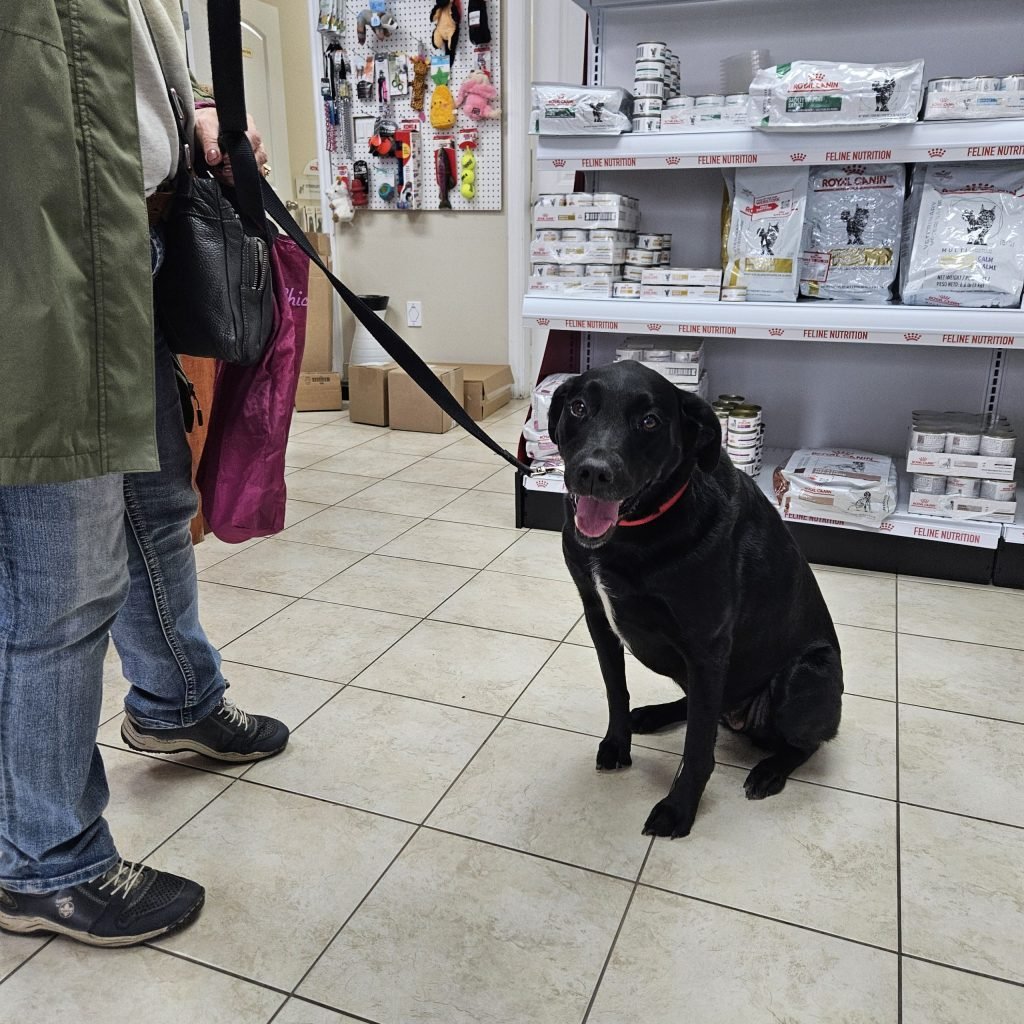
Bringing Your Kitten Home
Before They Arrive
Set up one room before your kitten arrives rather than giving it the whole house. A spare room or a quiet corner with a litter box, food and water at opposite ends from the box, a bed, a scratching post, and somewhere to hide is the whole requirement. A kitten given too much space too early tends to disappear behind something and stay there.
Get a hard-sided carrier that opens from the top as well as the front, because lifting a cat out beats dragging it out for the rest of its life. Then go round at kitten height: tuck away cords and blind pulls, close toilet lids, check the washing machine and the dryer before every use, and move any lilies out of the house entirely. That last one is covered below and is not an exaggeration.
The First Week
Let your kitten come to you. Sit on the floor in its room, read something, and ignore it. Most kittens emerge within a day or two, and the ones that take longer are not broken. Keep the food it arrived on and change over gradually if you want to switch.
Show it the litter box after meals and after sleep, and do not move the box in the first week. Start handling the paws, ears, and mouth for a few seconds at a time now. Play with a wand toy rather than your hands, so hands never become something to bite.
Book the first wellness visit within 72 hours of bringing your kitten home. That timing is deliberate: it catches the things that are easiest to deal with early, including intestinal parasites, ear mites, and an FIV and FeLV test, and it means anything the breeder or shelter did not mention gets found while you still have options. Bring any records and a fresh stool sample. Call (604) 501-0077 or book online. Learn more about our Wellness Program
At-a-Glance Vaccine Schedule
This is the standard core schedule for a kitten in British Columbia. Yours may differ depending on age and history, so treat it as the shape of the plan rather than a fixed calendar.
| Age | Vaccine | Type | Notes |
|---|---|---|---|
| 6 to 8 weeks | FVRCP | Core | Feline herpesvirus, calicivirus, and panleukopenia in one injection. First of the series. |
| 8 to 12 weeks | FeLV | Lifestyle | Recommended for any kitten that will go outdoors or live with a cat that does. Test before vaccinating. |
| 10 to 12 weeks | FVRCP | Core | Second of the series. |
| 12 to 16 weeks | FeLV | Lifestyle | Second dose, three to four weeks after the first. |
| 14 to 16 weeks | FVRCP | Core | Final kitten dose. Protection is not considered reliable until this one has been given. |
| 14 to 16 weeks | Rabies | Core | Recommended in British Columbia. Not required by provincial law or by Surrey’s bylaw, which is covered below. |
| 12 months | FVRCP and rabies boosters | Core | Then at the interval we recommend for your individual cat. FeLV boosted annually where it applies. |
We test for FIV and FeLV before giving the FeLV vaccine, because vaccinating a cat that is already infected achieves nothing and the result changes other advice we would give you.
Important Note on Lifestyle Vaccines
For cats, the single question that drives the lifestyle vaccine decision is whether your cat will go outdoors, and that includes whether it will live with a cat that does.
FeLV is the one that depends on it. Feline leukaemia virus passes between cats through prolonged close contact, shared bowls, mutual grooming, and bites. An indoor-only cat in a single-cat household is at very low risk. A cat with any outdoor access, or one living with an indoor-outdoor cat, should be vaccinated. A national study of more than eleven thousand cats found feline leukaemia virus in 3.4 percent and feline immunodeficiency virus in 4.3 percent. There is no reliable British Columbia only figure, so we quote the national one. Outdoor access, being male, and being unneutered all raised the odds.
FIV is spread mainly through deep bite wounds from fighting, which makes it an outdoor, unneutered, male cat problem above all. There is no FIV vaccine available in Canada, so prevention here means neutering and controlling outdoor access rather than vaccination. We test for it, because knowing matters.
Rabies. Bats are the only rabies reservoir in British Columbia. There has not been a case in a domestic dog in the province since 1960, and spillover into other mammals has been rare and isolated. Rabies vaccination is recommended in British Columbia but, unlike Ontario, it is not required by provincial law and it does not appear in Surrey’s animal bylaw. We recommend it for cats regardless, and for one specific local reason: bats are the reservoir here, and a cat with outdoor access or access to an attic is far more likely than a dog to catch one.
What about the risks beyond disease? The BC SPCA names the risks of unsupervised outdoor access as disease and parasites, predation by wild animals, vehicle collisions, cat fights, and exposure to toxins. It also notes that most cats can live well indoors given enough enrichment, and recommends safe outdoor options such as a catio or leash walks. Our own view is that a catio, a secure garden, or leash walks give a cat most of what it wants from outdoors without most of what makes outdoors dangerous.
Spay and Neuter
Five to six months is the standard timing for both males and females, and it is one of the few places in this guide where the answer is genuinely straightforward. Some shelters and some veterinarians perform early spay and neuter from around eight weeks and two kilograms, which is well established and safe in healthy kittens, and it is often how a kitten adopted from a rescue arrives already done.
The reason not to wait is that cats mature earlier than people expect. A female can come into heat from about four months and can become pregnant at that first cycle, and a cat can have several litters in a year. A cat in heat is loud, restless, and determined to get out, and keeping an unspayed female reliably indoors is harder than it sounds.
Pyometra. In an unspayed female, the uterus can fill with infected material, most often in the weeks after a heat cycle. It makes a cat seriously unwell and usually needs surgery performed urgently rather than electively. Spaying removes the possibility entirely.
In males, neutering reduces spraying, roaming, and fighting, which in turn reduces the bite wounds that transmit FIV. Surrey permits no more than five cats over twelve weeks of age per property.
We perform both procedures here. Every patient has a physical examination and recommended pre-anaesthetic bloodwork first, an anaesthetic plan matched to its age and weight, and continuous monitoring by a team member throughout. Pain control starts before the first incision. Learn more about our Surgical Services
Nutrition for Your Kitten’s First Year
Cats are obligate carnivores. That is not a marketing phrase, it is a metabolic fact with consequences. Cats cannot make enough taurine, arachidonic acid, vitamin A, or niacin from plant sources the way dogs and people can, and a taurine-deficient diet causes heart disease and blindness. A food formulated for cats supplies these. A food formulated for dogs, or a home-made diet put together without guidance, often does not.
Look for a statement that the food is complete and balanced for growth, or for all life stages, formulated to AAFCO standards.
Wet or dry. Both can be complete. The argument for including wet food is water: cats evolved taking most of their moisture from prey and many are poor drinkers, which matters for a species prone to urinary problems. A practical compromise is wet food at meals with dry available, or wet food once daily. Use a wide, shallow bowl, keep water away from the food, and consider a fountain, since many cats prefer moving water.
- Up to 6 months: three to four meals a day.
- 6 to 12 months: two meals a day.
- Free feeding dry food: workable for some cats, but it makes weight gain easy and hides a drop in appetite, which in a cat is often the first sign of illness.
Foods that are dangerous to cats. Onions, garlic, chives, and leeks; grapes and raisins; chocolate; alcohol; raw bread dough; xylitol; and cooked bones. Cow’s milk gives most adult cats diarrhoea and has no nutritional purpose. Raw fish in quantity can cause a thiamine deficiency. Tuna meant for people is not a balanced diet.
If your kitten needs a therapeutic diet, meaning one formulated for a specific health condition, we will explain why and for how long. Learn more about our Nutrition Counselling
Parasites: What to Know
Intestinal worms. Roundworms pass through the mother’s milk, so most kittens have them whether or not they look unwell. Deworming usually runs every two weeks until twelve weeks of age, then monthly until six months. We check a stool sample at the kitten visits rather than guessing. Tapeworm is worth a separate mention because it comes from swallowing a flea, so a tapeworm finding means there is a flea problem to deal with as well.
Fleas. A year-round reality in the mild, wet Lower Mainland, including for indoor-only cats, because fleas arrive on trouser legs and in shopping. Use a product made for cats and sized for your kitten’s weight. Never use a dog flea product on a cat; some are seriously toxic to them.
Ear mites. Very common in kittens and easily missed. The sign is dark, crumbly debris in the ear and persistent head shaking or scratching. We look under the microscope rather than judging by appearance, because yeast and bacterial infections look similar from the outside and need a different approach.
Giardia. Giardia was found in 2.2 percent of dogs tested in British Columbia in a national study, rising to 5.5 percent in dogs under a year old. As few as ten cysts can establish an infection, and the cysts survive ordinary water chlorination. In kittens it causes loose, foul-smelling stool. Keep water bowls clean and change them daily.
FIV and FeLV testing. We recommend testing every new kitten once, from a small blood sample run here. Both can pass from an infected mother, and a kitten can look entirely healthy and still carry one. The result changes what we recommend about outdoor access, about vaccination, and about introducing your kitten to resident cats. A national study of more than eleven thousand cats found feline leukaemia virus in 3.4 percent and feline immunodeficiency virus in 4.3 percent. There is no reliable British Columbia only figure, so we quote the national one. Outdoor access, being male, and being unneutered all raised the odds. Learn more about our Pet Diagnostics
Family safety. Some intestinal parasites can pass to people, and toxoplasma is the one that comes up in pregnancy. The practical answer is routine: someone other than a pregnant person scoops the box daily, gloves and handwashing either way, and cooked rather than raw food for the cat. Daily scooping matters because the organism needs time in the box to become infectious.
Litter Box Success
Most litter box problems are created by the setup, and nearly all of them are easier to prevent than to fix.
- Number: one box per cat plus one spare. Two cats means three boxes. They should not all be in the same room, because two boxes side by side are one box to a cat.
- Size: one and a half times the length of your cat, nose to base of tail. Most boxes sold for cats are too small, and a storage tub often works better than a purpose-made box.
- Location: quiet, easy to reach, with more than one way out so the cat is never cornered. Not next to the washing machine, not next to the food, and not somewhere the dog can follow.
- Litter: most cats prefer fine, unscented, clumping litter about three to four centimetres deep. Scented litter is for people, not for cats.
- Lids and liners: many cats dislike both. If you are having problems, take the lid off first.
- Cleaning: scoop daily, change entirely and wash the box weekly with soap and water. Avoid anything strongly scented or ammonia-based.
A cat that stops using the box is giving you medical information. This is the most important paragraph in this section. Cats avoid a box that hurts to use, so urinary infection, crystals, bladder inflammation, constipation, or arthritis in an older cat all present as a cat going somewhere else. It is almost never spite and it is usually not a training failure.
Call us before you change the litter, move the box, or buy a deterrent, particularly if your cat is straining, going frequently, producing very little, crying in the box, or over-grooming its belly. In a male cat, straining with little or no urine produced can indicate a urinary blockage, which becomes life-threatening within about a day and should not wait overnight. Learn more about our Urgent Care
Socialisation and Cooperative Care
The sensitive period for kittens runs from about two to nine weeks, which is earlier and shorter than for puppies and usually means much of it happened before you met your kitten. That is worth knowing rather than worrying about: it makes what you do in the weeks after you get it more important, not less.
Daily handling is the whole job. A few minutes a day touching the paws, looking in the ears, lifting the lip, brushing briefly, and running a hand down the back and belly, stopping before your kitten has had enough rather than after. Pair it with something it likes. This is why some fifteen-year-old cats are examined calmly in a lap and others need sedation for a nail trim, and the difference is almost entirely decided in the first year.
Carrier training from day one. Leave the carrier out permanently as ordinary furniture with a familiar blanket in it. Feed meals in it with the door open. Put treats in it when your kitten is not looking. Take short car journeys that end back at home. A cat that will walk into its own carrier is a cat that gets veterinary care when it needs it, rather than when it can be caught.
Other experiences worth building in. Visitors, the vacuum at a distance, nail clippers touching a paw without cutting, a toothbrush, being picked up and put down, and different surfaces. Keep each one brief and end on a good note.
For socialisation and training help, the BC SPCA’s AnimalKind directory lists trainers accredited to a published humane standard, and two of them serve Surrey. We point you at the directory rather than at a particular business, because it stays current and the standard is the part that matters. Ask us as well, since we see which approaches work for nervous animals.
Play, Enrichment, and Safety
Cats hunt. Play that imitates hunting is not optional enrichment, it is how a cat stays mentally well, and most behaviour problems in indoor cats trace back to not getting it.
Types of play. Wand and feather toys let your kitten stalk, chase, and pounce, and you should let it catch the toy at the end rather than teasing indefinitely. Puzzle feeders and food balls make a cat work for part of its meal. Cardboard boxes and paper bags with the handles removed are better than most things sold in shops. Vertical space matters as much as floor space: a cat tree, a shelf, or a cleared windowsill.
Never use your hands as a toy. A kitten biting fingers is adorable at twelve weeks and a genuine problem at two years, and the habit is far easier never to start.
Unsafe toys. String, wool, ribbon, tinsel, hair ties, and elastic bands are the dangerous ones, and the reason is in the next section. Also avoid toys small enough to swallow, toys with glued-on eyes or bells that detach, and laser pointers used without ever letting the cat catch something real at the end, which leaves some cats frustrated.
Window and balcony safety. Cats fall. Fit secure screens on any window that opens, and remember that a sliding window left open at the top is a gap a kitten can get through. Balconies need full enclosure or they are not safe, and a leaning insect screen will not hold a cat’s weight.
Catios and harnesses. A catio, an enclosed run or balcony, gives a cat outdoor air, sunshine, and things to watch with none of the traffic, coyotes, fights, or disease. Harness and leash walking suits some cats if introduced slowly indoors first, with a properly fitted harness rather than a collar. Both are better answers than unsupervised outdoor access.
Children and Other Pets
Children
Cats opt out rather than escalating, at least at first, so the main risk with children is a cat with nowhere to go. Teach the rules before the kitten arrives: do not pick the cat up without asking, do not follow it when it walks away, do not disturb it eating or in the litter box, and stroke the head and shoulders rather than the belly and tail.
Give your kitten high places and a hiding spot the children cannot reach, and enforce it. Show children what a cat looks like when it has had enough: a flicking tail, ears turning back or flat, skin twitching along the back, a sudden stillness. A cat ignored at that point is a cat that scratches, and it will have warned first.
Other Cats
Go slower than feels necessary. Keep the new kitten in its own room for several days to a week. Feed both cats on either side of the closed door so they associate each other with food. Swap bedding between them. Then swap rooms so each explores the other’s space without a meeting.
Introduce through a baby gate or a cracked door before a full meeting, and keep the first face to face encounter short and supervised. Make sure there are enough resources that nothing needs contesting: separate bowls, enough litter boxes, and plenty of vertical space. Hissing and swatting are normal early. Sustained chasing, a cat that stops eating, or a cat that stops using the litter box means back up a stage.
Some adult cats never become friends with a new kitten and simply tolerate it. That is a reasonable outcome and not a failure.
Dogs
The kitten needs escape routes the dog cannot use, and that is most of the work: high shelves, a cat tree, a baby gate with a cat-sized gap, and a litter box somewhere the dog cannot reach. A cat that feels cornered at its own litter box will stop using it.
Keep the dog on a lead for the first meetings so it cannot chase, because chasing is self-rewarding and becomes a habit fast. Reward the dog for ignoring the kitten rather than for engaging with it. Never leave them alone together until you have watched them be boring together many times over, and be particularly careful with breeds bred to chase small animals.
Foreign-Body Ingestion Hazards
String is the hazard that matters most in cats, and it deserves a plain warning. Thread, wool, ribbon, tinsel, dental floss, elastic bands, and hair ties are all what we call linear foreign bodies. One end anchors, usually under the tongue or at the base of the stomach, while the intestine keeps trying to move the rest along. The intestine gathers up like a curtain on a rail and the string saws through the wall from the inside. This is a surgical emergency and it is a different, more serious problem than swallowing a solid object.
If you can see thread at your cat’s mouth or rear, do not pull it. Pulling makes the damage worse. Call (604) 501-0077 immediately.
Other things cats swallow: hair ties, earplugs, small toy parts, bones, corn cobs, foam, and pieces of plastic bag. Cats also lick things, so anything sticky or oily on the coat ends up ingested.
Signs of a blockage. Repeated vomiting, refusing food, lethargy, a painful abdomen, drooling, pawing at the mouth, or straining without producing stool. A cat that vomits once and is otherwise bright is usually fine; a cat that keeps vomiting and will not eat needs seeing the same day. Cats hide illness well, so bring them in sooner rather than later.
Call (604) 501-0077 if you think your kitten has swallowed something. Learn more about our Urgent Care
Holiday and Household Hazards
Lilies. Read this paragraph even if you read nothing else here. True lilies, meaning Lilium and Hemerocallis species including Easter lilies, tiger lilies, Asiatic and Oriental lilies, and day lilies, cause acute kidney failure in cats. Every part is toxic. A cat that chews a leaf, licks pollen off its coat, or drinks the vase water can be in kidney failure within days, and there is no reliable way to reverse it once it is established. There is no safe amount. Do not have them in the house, and tell anyone who might send you flowers. If your cat has had any contact with a lily, call us immediately rather than waiting for symptoms, because the window where intervention works is short.
Other plants. Sago palm, oleander, azalea and rhododendron, dieffenbachia, pothos, philodendron, peace lily and calla lily, which are not true lilies but still irritant, autumn crocus, yew, and tulip and daffodil bulbs. Mushrooms in the garden are covered in the Local Health Notes below.
Essential oils. Cats lack an enzyme that lets other species process phenols, so oils that are fine around people can be harmful to them. Tea tree, eucalyptus, citrus, peppermint, pine, wintergreen, cinnamon, and ylang ylang are among the worst. Active diffusers are the particular problem, because the oil settles on the coat and gets groomed off and swallowed. If you use a diffuser, use it in a room your cat cannot enter.
Human health products. Pain relief tablets are the ones that cause the most harm. A single tablet of some human pain relief products can be fatal to a cat, because cats process them very differently from people. Keep everything in a closed cupboard, not a bedside drawer, and never give your cat anything intended for a person without asking us first.
Cleaning products. Anything containing phenols, strong pine or citrus cleaners, bleach, and toilet bowl tablets. Cats walk on treated floors and then groom their paws, so let surfaces dry fully before letting them back in.
Seasonal. Lilies in Easter bouquets. Tinsel, ribbon, and string at Christmas. Chocolate. Antifreeze in winter, which is sweet and lethal in tiny amounts. Rat bait in autumn. Candles and open flames, which singe whiskers and tails.
If your cat eats or contacts something it should not have, call (604) 501-0077 straight away. Bring the packaging or a photograph.
Grooming Basics
Cats groom themselves, which leads people to think they need no help. Long-coated cats definitely do, and every cat benefits from being handled.
- Short coats: a weekly brush is plenty, mostly to reduce shedding and hairballs.
- Long and semi-long coats, such as Persians, Maine Coons, and Ragdolls: daily or near-daily brushing. Mats form behind the ears, under the collar, in the armpits, and around the rear, and once a coat has matted to the skin, clipping it is the only humane answer.
- Nails: every two to four weeks. Press the paw gently to extend the claw and take only the clear tip, staying away from the pink. One nail a session is fine if that is all your kitten allows. Provide scratching posts in both vertical and horizontal form; scratching is a need, not a misbehaviour.
- Ears: check weekly. Clean only when needed, and have a painful or inflamed ear looked at before it is cleaned.
- Teeth: start now. Let your kitten lick the paste off your finger for a few days, then touch the teeth, then introduce a small brush for a few seconds. Dental disease and tooth resorption are both common in adult cats and both are easier to stay ahead of. Learn more about our Dental Care
- Baths: rarely needed, and most cats find them genuinely distressing.
Some cats cannot be groomed at a salon: a matted coat, a painful skin condition, an arthritic or anxious animal, or one that will not tolerate handling. We offer grooming in a clinical setting for exactly those cases, with sedation available where it is kinder, and we check the ears, teeth, skin, and nails properly while there is no struggle involved. Learn more about our Medical Grooming Services
Local Health Notes
This section is specific to Surrey and the Lower Mainland.
Death cap mushrooms. Death cap mushrooms are established in the Lower Mainland, with more than a hundred recorded sightings between Vancouver and the Fraser Valley. They fruit from late August into early November, grow in urban areas under introduced trees such as beech, chestnut, hornbeam and English oak, and the BC Centre for Disease Control describes them as especially dangerous to children and pets. Walk your garden between late summer and the first hard frost and remove what you find, particularly if your cat has any outdoor access. If your cat eats an unknown mushroom, call us immediately and bring a sample or a photograph.
Coyotes. The BC SPCA estimates two to three thousand urban coyotes live in the Lower Mainland, and the City of Surrey lists coyotes among the wildlife in Tynehead Regional Park. This is the single strongest argument for keeping cats in, or giving them enclosed outdoor access instead. Coyotes are most active from dusk until dawn, which is also when cats most want to be out.
Rabies. Bats are the only rabies reservoir in British Columbia. There has not been a case in a domestic dog in the province since 1960, and spillover into other mammals has been rare and isolated. Rabies vaccination is recommended in British Columbia but, unlike Ontario, it is not required by provincial law and it does not appear in Surrey’s animal bylaw. The local relevance for cats is bats specifically: a cat with outdoor or attic access is far more likely than a dog to catch one, and a bat encounter is managed very differently depending on vaccination status.
Outdoor risks beyond wildlife. The BC SPCA names the risks of unsupervised outdoor access as disease and parasites, predation by wild animals, vehicle collisions, cat fights, and exposure to toxins. It also notes that most cats can live well indoors given enough enrichment, and recommends safe outdoor options such as a catio or leash walks.
FIV and FeLV. A national study of more than eleven thousand cats found feline leukaemia virus in 3.4 percent and feline immunodeficiency virus in 4.3 percent. There is no reliable British Columbia only figure, so we quote the national one. Outdoor access, being male, and being unneutered all raised the odds. Outdoor access, being male, and being unneutered all raised the odds, which is the same list of things that neutering and indoor living address.
Ticks. The western black-legged tick is established on the British Columbia coast, including the Lower Mainland, so a tick check after a trail walk is worth doing. Risk here is genuinely lower than in eastern Canada: provincial testing in 2025 found under one percent of these ticks carried the Lyme bacteria, and British Columbia reported 42 human cases that year. Cats with outdoor access pick them up on the head and neck. Never use a dog tick product on a cat.
Surrey bylaw, in plain terms. Surrey does not require a licence for cats. The licensing section of the bylaw applies to dogs only. Surrey permits a maximum of six companion animals per property, of which no more than three may be dogs over eight weeks and no more than five may be cats over twelve weeks. The bylaw does require that a female cat in heat be kept securely confined indoors or in an enclosure, which is a reasonable prompt to book the spay rather than manage the problem.
Giardia. Giardia was found in 2.2 percent of dogs tested in British Columbia in a national study, rising to 5.5 percent in dogs under a year old. As few as ten cysts can establish an infection, and the cysts survive ordinary water chlorination. Change water bowls daily and keep them away from the litter box.
Low-Stress Veterinary Visits
Carrier Training
This is the part that makes everything else possible, so it comes first. Leave the carrier out permanently as a piece of furniture rather than producing it on the day. Put a familiar blanket in it, feed meals in it with the door open, and drop treats in when your cat is not watching. Take short car journeys that end back at home rather than at the clinic.
Choose a hard carrier that opens at the top as well as the front. Being lifted out from above is calmer than being pulled out from the front, and on the day we can often examine a cat in the bottom half of its own carrier with the top removed.
Before the Visit
Spray or wipe a feline pheromone product in the carrier half an hour beforehand if you have one, and cover the carrier with a towel for the journey so your cat can see less. Secure the carrier with a seatbelt, keep the radio low, and avoid the boot.
Tell us when you book if your cat finds visits difficult. We can give you a quieter appointment time, take you straight through to a room rather than past a waiting area with dogs in it, or plan the visit in stages. Call (604) 501-0077.
In the Clinic and Happy Visits
We let cats come out of the carrier in their own time rather than tipping them out, examine them in the bottom half of the carrier or on a towel from home where that works better, and keep handling to the minimum the examination needs. If your cat has had enough we would rather stop and finish another day.
You are welcome to bring your kitten in for nothing at all. Walk in, let it sit on the scale, take a treat, and go home again with nothing having happened to it. No appointment and no charge; just ring (604) 501-0077 first so we can pick a time when it is quiet. Families in Newton and across Surrey do this, and for a cat it pays off for the next fifteen years.
When to Contact Us
Call us on (604) 501-0077 whenever you are not sure. We are open seven days a week, Monday to Saturday until 10:00 PM and Sunday until 6:00 PM, and a phone call costs you nothing. Describing what you are seeing is enough.
Cats are specialists at hiding illness, so the threshold for ringing about a cat should be lower than it feels. A cat that has gone quiet, hidden itself away, or stopped eating is telling you something.
Contact Us Same Day For
- Straining in the litter box, going frequently, or producing little or no urine. In a male cat this is urgent and should not wait.
- Not eating for 24 hours, or a sudden drop in appetite
- Repeated vomiting, or any vomiting with lethargy
- Laboured or open-mouthed breathing, which in a cat is always serious
- Hiding away, or a sudden change in temperament
- Collapse, seizure, or sudden weakness in the back legs
- Pale or white gums, or a yellow tinge to the gums or eyes
- Any contact at all with a lily
- Suspected poisoning, including an unknown mushroom or an essential oil exposure
- Thread or string visible at the mouth or rear. Do not pull it.
- A bite wound or abscess from a fight
- An eye held shut, cloudy, or visibly injured
- A fall from a height, even if your cat seems unhurt
Schedule a Routine Appointment For
- The vaccine series and the annual visit afterwards
- FIV and FeLV testing
- Routine deworming and stool checks
- Spay or neuter planning
- Mild, occasional loose stool in an otherwise bright kitten
- Ear scratching or head shaking that has been going on a few days
- Over-grooming, or a bald patch
- Litter box habits that have changed gradually rather than suddenly
- A lump or swelling that is not painful and is not growing quickly
- Nail trims and grooming
- Food, feeding, and weight questions
- Behaviour questions, including scratching furniture and night-time activity
Pet Insurance
The best time to arrange pet insurance is before your kitten’s first appointment, and ideally before anything has been written in its medical record. Insurers in Canada do not cover pre-existing conditions, and a note made at a first visit can count as one. A young, healthy kitten is the easiest animal to insure and the cheapest.
Providers operating in Canada include Trupanion, Pets Plus Us, Petsecure, Economical, and Intact. This list is offered for information only and is not an endorsement of any provider. We have no financial relationship with any insurer, and we do not receive anything if you choose one over another.
Things worth comparing before you buy: whether the annual limit is per condition or overall, whether dental care is included, how the deductible works, whether the premium rises with your pet’s age, and what the waiting period is before cover starts. Ask whoever you choose to put the answers in writing.
Frequently Asked Questions
When should my kitten start vaccinations in Surrey?
Most kittens begin at six to eight weeks and come back every three to four weeks until about sixteen weeks of age. The core vaccine is FVRCP, which covers feline herpesvirus, calicivirus, and panleukopenia, and rabies is given towards the end of the series. Panleukopenia in particular is severe and survives a long time in the environment, so the full series matters more than any one appointment. Call us on (604) 501-0077 and we will build the schedule around your kitten’s age and what it has already had.
When should I spay or neuter my kitten?
Five to six months is the usual timing for both males and females, and some shelters do it earlier at around eight weeks and two kilograms. Cats can become pregnant from about four months, which is earlier than most people expect, so leaving it late is how accidental litters happen. Spaying also removes the risk of pyometra, a serious uterine infection that affects older unspayed females and usually needs emergency surgery. We perform both procedures here with continuous anaesthetic monitoring.
Should my kitten be tested for FIV and FeLV?
Yes, we recommend testing every new kitten once, and the test is a simple blood sample we run here. Both viruses can pass from an infected mother, and a kitten that looks healthy can still carry one. A national study of more than eleven thousand cats found feline leukaemia virus in 3.4 percent and feline immunodeficiency virus in 4.3 percent. Knowing the result changes what we recommend about outdoor access, about vaccination, and about introducing your kitten to other cats in the house. Learn more about our Pet Diagnostics
My kitten has stopped using the litter box. What should I do?
Treat it as a medical sign first and a behaviour problem second. Cats avoid a box that hurts to use, so a urinary infection, crystals, or inflammation can look exactly like a training failure. Call us before you change the litter or move the box, particularly if your kitten is straining, going frequently, producing very little, or crying. In a male cat, straining with little or nothing produced is urgent and should not wait overnight.
Should I let my kitten outside in Surrey?
We would encourage you to keep your cat indoors, or to give it outdoor access you control. The BC SPCA names the risks as disease and parasites, predation by wild animals, vehicle collisions, cat fights, and exposure to toxins, and the Lower Mainland has an estimated two to three thousand urban coyotes. A catio, a secure garden, or leash walks give a cat the outdoors without most of that. If your cat will go out, FeLV vaccination becomes important rather than optional.
What should I feed my kitten?
A food labelled complete and balanced for growth to AAFCO standards, formulated for kittens rather than for adult cats. Cats are obligate carnivores, which means they need nutrients such as taurine that they cannot make in sufficient quantity themselves, and a diet built for a dog or a person will not supply them. Feed three to four meals a day until six months, then twice daily. Include wet food if you can, because cats evolved to take most of their water from prey and many do not drink enough. Learn more about our Nutrition Counselling
How soon can my kitten get pregnant, and what are my options in Newton?
Earlier than most people expect. A female cat can come into heat from around four months and can become pregnant at that first cycle, and cats can have several litters a year. Keeping an unspayed female indoors is not a reliable plan, because a cat in heat is determined and vocal about it, and Surrey’s bylaw caps a household at five cats over twelve weeks. Book the spay at five to six months rather than waiting, and call us on (604) 501-0077 if you think your kitten may already be in heat. Learn more about our Surgical Services
Contact Us
City Petcare Hospital & Urgent Care
7218 King George Blvd Ste 120, Surrey, BC V3W 5A5
Phone: (604) 501-0077
Email: citypetcareanimalhospital@gmail.com
Hours: Monday, Tuesday, Wednesday, Thursday, Friday, and Saturday 8:00 AM to 10:00 PM. Sunday 9:00 AM to 6:00 PM.
Disclaimer
This guide is intended for general educational purposes only and does not constitute veterinary medical advice. Always consult a licensed veterinarian for your pet’s individual health needs.